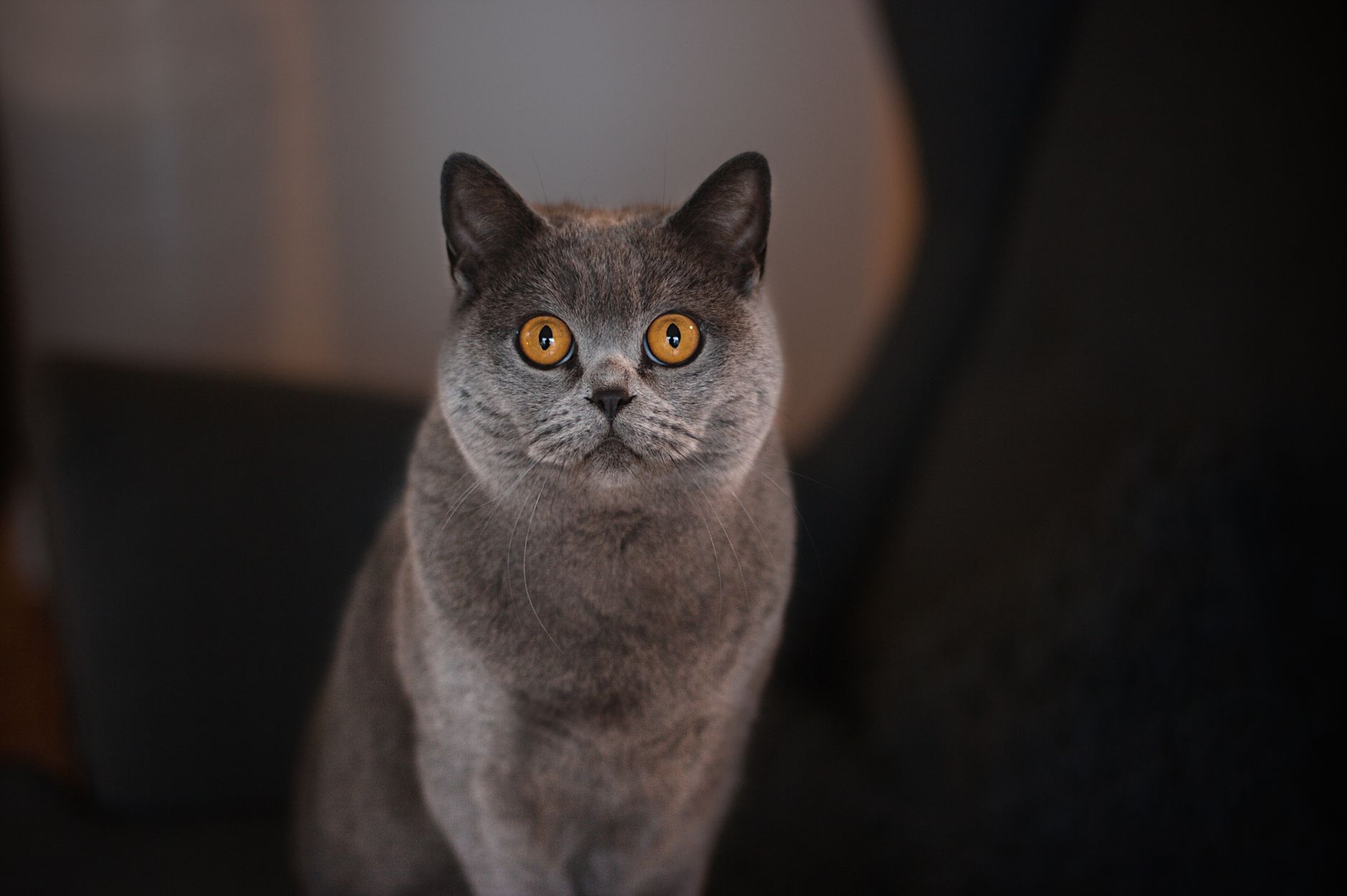
In short: The British Shorthair is a calm, sturdy, easygoing cat breed from Great Britain, prized for its round face, dense plush coat, and famous blue-gray “British Blue” color. Males weigh 12–17 pounds and females 8–12, they live 14–20 years, and they are quiet, undemanding, family-friendly cats that prefer to sit beside you rather than on your lap.
One of the oldest English cat breeds, the British Shorthair (sometimes written “British short hair” or called the English Shorthair) is low-maintenance, patient with children, and content to be a mellow indoor companion. This guide covers everything American owners ask: temperament, size, health, grooming, price from reputable British Shorthair breeders, and whether this dignified cat is the right fit for your home.

British Shorthair Breed Info Card
| Trait | British Shorthair |
|---|---|
| Weight | Males 12–17 pounds; females 8–12 pounds |
| Height | Roughly 12–14 inches at the shoulder |
| Lifespan | 14–20 years; commonly 14–16 |
| Coat | Short, dense, crisp “plush” double coat with no long guard hairs |
| Colors | Over 30, including the iconic British Blue (blue-gray), plus black, white, cream, tabby, colorpoint, tortoiseshell, and bicolor |
| Eye color | Deep copper or gold in most colors; blue or green in some varieties |
| Temperament | Calm, dignified, affectionate but independent, quiet, easygoing |
| Origin | Great Britain — refined in the late 1800s from native British cats |
| Grooming needs | Low — weekly brushing, more during seasonal shedding |
| Maturity | Slow — reaches full size and weight at 3–5 years |
| Kitten price (US) | Roughly $800–$2,500 from reputable breeders; blue and rare colors run higher |
- Affection level
- Energy level
- Good with kids
- Good with other pets
- Shedding
- Vocality
- Grooming needs
- Suitable for first-time owners
History: Britain’s Original House Cat
The British Shorthair is one of the oldest and most recognizable cat breeds in the English-speaking world, with roots reaching back to the domestic cats the Romans brought to Britain nearly two thousand years ago. For centuries these hardy, thick-coated cats earned their keep as working mousers on farms, in shops, and around city streets. They were valued for exactly the traits the breed still shows today: toughness, self-reliance, and a placid, unflappable disposition.
The British Shorthair became a recognized breed in the late 1800s, largely thanks to Harrison Weir, the artist and cat fancier who organized the first modern cat show at London’s Crystal Palace in 1871. Weir championed Britain’s ordinary street cats, selecting the sturdiest and most handsome for exhibition and setting an early standard. The classic blue-gray specimens — the British Blue — quickly became the breed’s calling card and remain its most sought-after color.
The two World Wars nearly wiped out the breed. Numbers fell so low that breeders outcrossed to Persians and other cats to rebuild the population, which added coat density and helped give the modern British Shorthair its rounded, “cobby” look. The Cat Fanciers’ Association recognized the breed in the U.S. in 1980, and the British Shorthair has climbed steadily in American popularity ever since — helped along by its resemblance to Lewis Carroll’s Cheshire Cat and the plush-toy face that lights up social media.
British Shorthair Temperament and Family Life
The British Shorthair temperament can be summed up in one word: dignified. This is a calm, even-keeled, quiet cat that moves through the house like a self-possessed little bear. British Shorthairs are affectionate and loyal to their people, but they express it on their own terms. They will follow you from room to room, settle near you on the couch, and greet you at the door — yet many dislike being picked up or carried, and plenty are not classic lap cats.
Why are British Shorthairs “not cuddly”? It’s a common search, and the answer is nuance rather than aloofness. British Shorthairs are independent and secure; they don’t crave constant handling the way some clingy breeds do. That independence reads as reserve to owners expecting a Velcro cat. Give a British Shorthair the choice, though, and most are warmly companionable — they simply prefer proximity to being scooped up. Once you accept “beside you, not on you,” this breed is one of the most emotionally easy cats to live with.
Is a British Shorthair a good pet? Yes — this is one of the best-natured cat breeds for families, first-time owners, and busy households. British Shorthairs are famously patient with respectful children and coexist peacefully with other cats and cat-friendly dogs. They are quiet cats with soft, infrequent voices, and they tolerate being left alone during the workday better than more demanding breeds. Their laid-back nature also makes them content, well-adjusted indoor cats — which is exactly how they should be kept.

Size, Coat, and Colors
The British Shorthair is a medium-to-large, powerfully built cat with a broad chest, short sturdy legs, a rounded head, full cheeks, and large round eyes — the whole package reads as soft and circular. Males are noticeably bigger than females, typically 12–17 pounds against 8–12 pounds, and toms often develop prominent jowls. One thing that surprises new owners: British Shorthairs mature slowly, not reaching full adult size and weight until three to five years of age. The gangly kitten you bring home keeps filling out for years.
The coat is the breed’s signature. It’s short but exceptionally dense and crisp, standing slightly off the body with a plush, springy texture often compared to teddy-bear fur. There’s no long, straggly guard hair — just a thick, even pile you’ll want to sink your fingers into. That density is also why the breed sheds seasonally and why weekly brushing matters (more on grooming below).
British Shorthairs come in more than 30 colors and patterns, but a few stand out:
- British Blue. The classic solid blue-gray with copper eyes — the color most people picture and the most in-demand. “British Blue,” “blue British Shorthair,” and “British blue hair cat” all refer to this single most iconic variety.
- Solids. Black, white, cream, and chocolate, usually with rich copper or gold eyes.
- Tabby and spotted. Classic, mackerel, and spotted patterns, including the striking silver tabby.
- Colorpoint. Siamese-style points on a pale body, a legacy of the breed’s outcrossing history, typically with blue eyes.
- Tortoiseshell, calico, and bicolor. Including the popular orange (red) and cream-and-white combinations.
What is the rarest color of British Shorthair? The rarest and most valuable colors are typically the dilute and unusual varieties — chocolate, lilac, cinnamon, fawn, and the colorpoint and tipped (“silver shaded”) patterns — which are harder to breed to standard. Note that the Exotic British Shorthair is not an official variety; genuine Exotic Shorthairs are a separate flat-faced, Persian-derived breed, so treat “exotic British shorthair” listings with a healthy dose of caution.
British Shorthair Health Issues
⚠️ See a veterinarian promptly if you notice:
- Open-mouth breathing, rapid or labored breathing, or sudden lethargy — possible signs of hypertrophic cardiomyopathy (HCM), the breed’s most serious inherited heart disease.
- Increased thirst and urination, weight loss, or poor appetite — can indicate polycystic kidney disease or other kidney problems.
- Straining in the litter box, crying while urinating, or no urine at all — a urinary blockage is a life-threatening emergency, especially in overweight males.
- Sudden hind-leg weakness, dragging, or a cold, painful back leg — a possible blood clot linked to heart disease. Seek care immediately.
The British Shorthair is generally a robust, long-lived breed, but its Persian-influenced ancestry means responsible breeders screen for a handful of specific conditions. Ask any breeder for documentation before you commit:
- Hypertrophic cardiomyopathy (HCM). A thickening of the heart muscle and the most common serious health issue in the breed. Reputable breeders screen breeding cats with cardiac ultrasound (echocardiogram), and DNA tests exist for some HCM mutations.
- Polycystic kidney disease (PKD). An inherited condition, inherited from the Persian outcrosses, in which fluid-filled cysts gradually damage the kidneys. A simple DNA test lets breeders avoid producing affected kittens.
- Obesity. The single most preventable British Shorthair health problem. This laid-back, food-motivated breed gains weight easily, and excess pounds worsen nearly everything else — joints, heart, urinary tract, and diabetes risk.
- Dental disease. Like many purebred cats, British Shorthairs are prone to gingivitis and tooth resorption. Home tooth brushing and regular veterinary dental care go a long way.
- Hemophilia B. A rare inherited bleeding disorder in some lines, screenable by DNA test.
With good breeding, an ideal weight, and routine veterinary care, British Shorthairs often live into their late teens, and some reach 20. Their long lifespan is one of the breed’s real joys — but it also means a genuine 15-to-20-year commitment.
This article is informational and does not replace an exam by a licensed veterinarian. If you suspect a health problem, consult your vet.
Grooming and Shedding
For such a plush cat, the British Shorthair is refreshingly low-maintenance. The short coat doesn’t mat, so a thorough brushing once a week with a stainless-steel comb or a soft slicker is usually enough to remove loose hair and keep the coat healthy. During the spring and fall shedding seasons, that dense double coat blows out more heavily — brush two or three times a week for a few weeks and you’ll cut down on hairballs and stray fur on the furniture. Yes, British Shorthairs do shed, but far less dramatically than a long-haired breed.
Round out the routine with nail trims every couple of weeks, weekly ear checks, and — importantly for this breed — regular tooth brushing to stay ahead of dental disease. Bathing is rarely necessary; the coat stays clean on its own. Because British Shorthairs are prone to weight gain, skip free-feeding and use grooming time to run your hands over the body and monitor condition.
Feeding and Weight Management
Feeding a British Shorthair is mostly an exercise in portion control. This is a calm, low-energy breed with a hearty appetite, a combination that makes obesity the number-one lifestyle risk. Choose a high-quality cat food that meets AAFCO standards for your cat’s life stage, with named animal protein as the first ingredient, and feed measured meals rather than leaving a bowl out all day.
- Kittens: because British Shorthairs grow slowly over several years, feed a complete kitten formula until 12 months (some breeders extend it), split into three or more small meals daily.
- Adults: two measured meals a day. Follow the food’s guidelines as a starting point, then adjust to keep your cat lean — you should feel the ribs easily and see a slight waist from above.
- Hydration: incorporating wet food supports urinary and kidney health, a smart move given the breed’s PKD and urinary risks.
- Treats: keep them under 10% of daily calories. It’s easy to overfeed a cat that acts this grateful for a snack.
Exercise, Enrichment, and Training
British Shorthairs are not athletes, and they know it. They’re happy to be indoor cats and rarely climb curtains or tear around the house the way a more frantic breed might. But that placid nature is exactly why enrichment matters: left with nothing to do and a full food bowl, a British Shorthair will quietly eat and nap its way into obesity.
Aim for a couple of short, daily play sessions with a wand toy or feather teaser — most British Shorthairs will engage enthusiastically in bursts, then retire with dignity. Puzzle feeders and food-dispensing toys are ideal, turning mealtime into gentle exercise. A sturdy scratching post, a low-to-medium cat tree (these are ground-oriented cats, not big leapers), and a sunny window perch cover most of their needs. They’re smart, food-motivated cats and can learn to come when called or perform simple tricks with clicker training and treats.
Is a British Shorthair Right for You?
🐾 Who this breed suits
- First-time cat owners
- Families with children
- Multi-pet households
- Busy people away during the day
- Apartment & indoor living
- Owners wanting a cuddly lap cat
- Owners wanting a playful, high-energy cat
Get a British Shorthair if: you want a calm, quiet, low-drama companion; you have children or other pets; you’re a first-time owner or away for a normal workday; and you appreciate a cat that’s affectionate on its own terms and needs minimal grooming.
Look elsewhere if: you’re set on a cat that wants to be held and carried, a chatty companion that talks back, or a high-energy acrobat that plays for hours. Breeds like the Siamese or Abyssinian will suit that wish list better — the British Shorthair’s charm is precisely its unhurried, self-contained calm.
British Shorthair Kittens, Breeders, and Price

How much does a British Shorthair cat cost? From reputable U.S. British Shorthair breeders, expect to pay roughly $800–$2,500 for a pet-quality kitten, with the classic British Blue and popular colors often landing in the $1,500–$2,500 range. Rare colors, colorpoints, and show- or breeding-quality kittens from champion lines can run $3,000 or more. Because this is a slow-maturing, carefully bred breed with health testing behind it, prices sit at the higher end of the cat spectrum — and suspiciously cheap “British Shorthair kittens for sale” ads are a warning sign, not a bargain.
When evaluating British Shorthair breeders, look for cats registered with CFA or TICA, written health guarantees, and documentation of HCM screening (cardiac ultrasound on parents) and PKD DNA testing. Good breeders keep kittens until at least 12 weeks, raise them underfoot in the home, and will happily answer questions about temperament and lineage. Budget beyond the purchase price, too: quality food, litter, routine veterinary care, and pet insurance for a breed with known heart and kidney risks typically add several hundred dollars a year.
Consider adoption. Purebred British Shorthairs do turn up in shelters and with breed-specific rescues, and many “British Shorthair mix” or “British Blue type” cats — with the same round-faced, plush-coated charm — are waiting for homes right now. Adoption fees usually run $50–$200, adult cats come with a known personality, and rescue is a genuinely good way to bring one of these mellow cats into your life.
Frequently Asked Questions
How much does a British Shorthair cat cost?
A British Shorthair kitten from a reputable U.S. breeder typically costs $800–$2,500, with the popular British Blue often $1,500–$2,500. Rare colors and show-quality kittens from champion lines can exceed $3,000. Adoption through a shelter or breed rescue usually runs $50–$200. Budget several hundred dollars a year on top for food, litter, and veterinary care.
Why are British Shorthairs not cuddly?
British Shorthairs are affectionate but independent, so they often dislike being picked up or held for long. It reads as “not cuddly,” but it’s really self-possession — most prefer to sit close beside you rather than on your lap. Respect that preference and you’ll find a warm, loyal companion who greets you, follows you around, and shows love on its own confident terms.
Is a British Shorthair a good pet?
Yes. The British Shorthair is one of the best cat breeds for families and first-time owners. It’s calm, quiet, patient with children, good with other pets, and content to be left alone during the workday. Low grooming needs and a mellow temperament make it easy to live with, though it’s better suited to owners who want a laid-back companion than a demanding lap cat.
What is the rarest color of British Shorthair?
The rarest British Shorthair colors are the dilute and specialty varieties — chocolate, lilac, cinnamon, and fawn — along with the colorpoint and silver-tipped patterns, which are difficult to breed to standard. These uncommon colors usually command higher prices. The blue-gray British Blue, by contrast, is the most iconic and widely available color, not a rare one.
Is it better to get a male or female British Shorthair?
Both make excellent pets, and personality varies more by individual than by sex. Males tend to be larger, with fuller cheeks, and are often described as a touch more openly affectionate and easygoing. Females can be slightly more reserved and independent. Once spayed or neutered, temperament differences largely even out, so choose the individual kitten whose personality clicks with yours.
How long do British Shorthair cats live?
British Shorthairs are long-lived cats, commonly reaching 14–16 years and often living into their late teens or even 20 with good care. Keeping your cat at a healthy weight, feeding quality food, and staying current on veterinary screening for heart and kidney disease all help. Their longevity is a real perk of the breed, but it also means a 15-to-20-year commitment.
Are British Shorthairs high maintenance?
No — British Shorthairs are one of the lower-maintenance pedigreed cats. Their short, dense coat needs only weekly brushing, more during seasonal sheds, and they don’t mat. They’re quiet, independent, and undemanding day to day. The main effort is preventive: portion-controlled feeding to avoid obesity, regular dental care, and routine vet checks for the breed’s known heart and kidney conditions.
Do British Shorthairs get along with dogs and other cats?
Generally yes. The British Shorthair’s calm, unterritorial nature makes it one of the more sociable breeds for multi-pet homes. Most coexist peacefully with other cats and with cat-friendly dogs, especially when introductions are gradual and each pet has its own space. Their easygoing confidence means they rarely start conflicts, though like any cat they appreciate a quiet retreat of their own.
Related Breeds
If the British Shorthair’s mellow charm appeals to you, explore these similar cats in our cat breeds hub:
- Scottish Fold — the folded-ear cousin with the same round face and sweet, calm temperament.
- Russian Blue — another elegant blue-gray breed, slightly more reserved and finer-boned.
- Exotic Shorthair — the plush “short-haired Persian,” equally laid-back but with the flat Persian face.
Sources: Cat Fanciers’ Association (CFA), The International Cat Association (TICA), Governing Council of the Cat Fancy, and the Cornell Feline Health Center — consulted for facts only. All text is original.
This article is for informational purposes and does not replace an examination by a licensed veterinarian.
