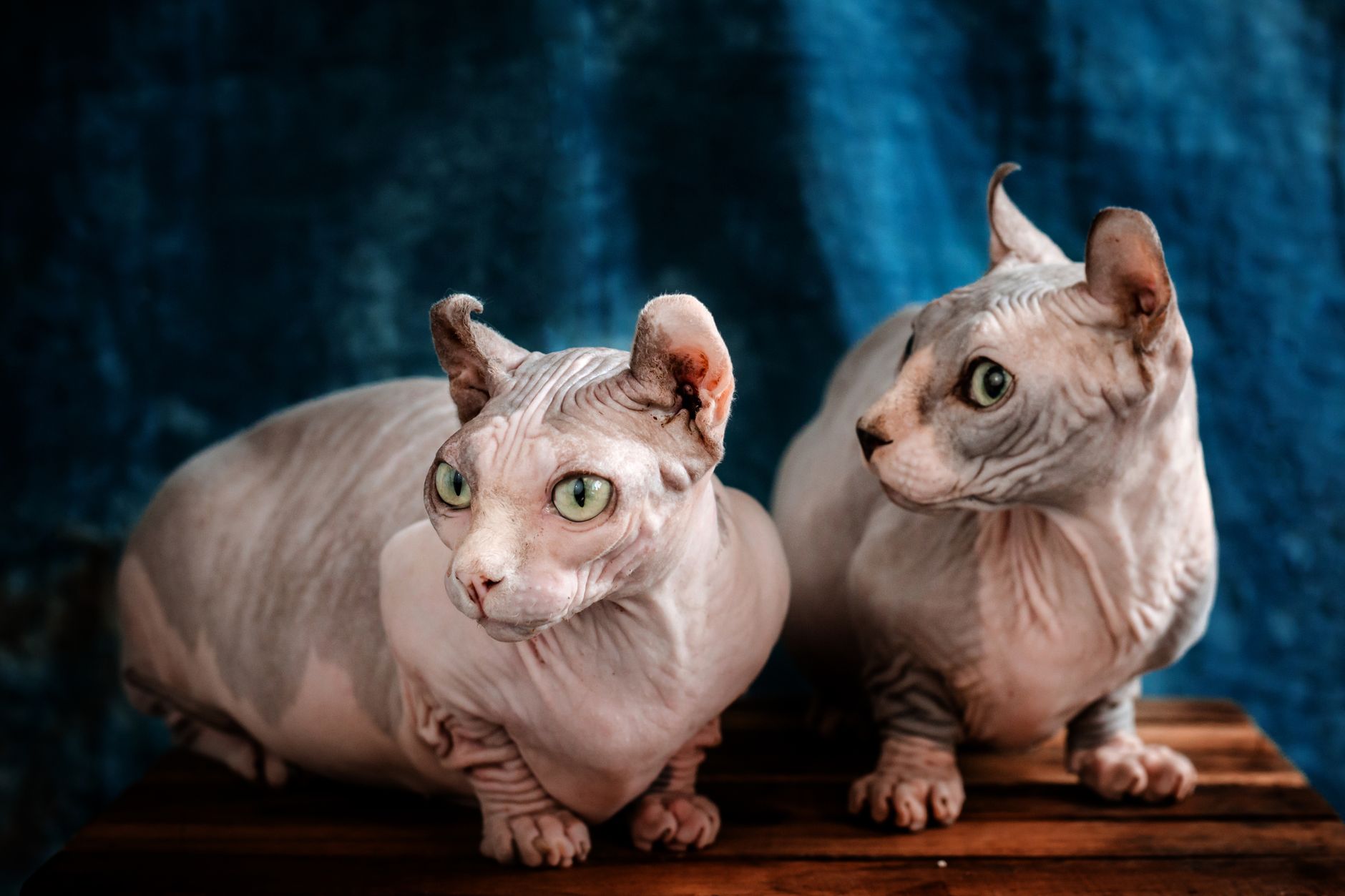
In short: The Sphynx cat is a medium-sized hairless cat breed known for its wrinkled, suede-soft skin, huge ears, and extraordinarily affectionate, dog-like personality. Weighing 6–12 pounds and living 8–14 years, the Sphynx is not truly bald — it’s covered in fine down — and it needs regular bathing to manage the oils its skin can’t wick into fur.
Despite the “hairless cat” reputation, the Sphynx is one of the warmest, most people-obsessed breeds you can own. This guide covers everything American owners ask about the Sphynx cat: temperament, size, the real health issues, skin and grooming care, lifespan, kitten prices from reputable breeders, and an honest answer to whether this quirky, high-maintenance companion is right for your home.

Sphynx Cat Breed Info Card
| Trait | Sphynx Cat |
|---|---|
| Weight | Males 8–12 pounds; females 6–9 pounds |
| Height | 8–10 inches at the shoulder |
| Lifespan | 8–14 years (many reach 12–15 with good care) |
| Coat | Effectively hairless — a fine, warm peach-fuzz down over suede-like skin |
| Colors & patterns | All — skin shows the cat’s underlying color: black, blue (gray), white/pink, tabby, calico, tortoiseshell, pointed |
| Temperament | Affectionate, extroverted, mischievous, energetic, deeply people-oriented |
| Origin | Toronto, Canada — 1966 |
| Shedding | Virtually none (but not hypoallergenic) |
| Grooming needs | High — weekly baths, ear cleaning, nail and skin-fold care |
| Kitten price (US) | Roughly $1,500–$6,000 from reputable breeders |
- Affection level
- Energy & playfulness
- Good with kids
- Good with other pets
- Vocality / talkativeness
- Grooming & upkeep
- Shedding
- Good for first-time owners
History: A Canadian Accident That Became a Breed
The modern Sphynx cat traces to 1966, when a domestic cat in Toronto, Canada, gave birth to a hairless kitten named Prune — the result of a spontaneous natural genetic mutation, not human engineering. Breeders recognized the novelty and began working to establish a healthy line, but the early gene pool was tiny and fragile. The real foundation of today’s breed came in the mid-1970s and early 1980s, when a handful of hairless kittens turned up in Toronto and in Minnesota and were bred to Devon Rex cats to widen the genetics and strengthen the line.
The name is a bit of a misnomer. The breed has nothing to do with Egypt or the Great Sphinx — early fanciers simply thought the cat’s regal, statue-like posture and enormous ears evoked ancient Egyptian art. Hairless cats have actually appeared throughout recorded history and around the world, but the Sphynx as a standardized breed is a distinctly North American creation.
The Cat Fanciers’ Association (CFA) accepted the Sphynx for championship status in 2002, and The International Cat Association (TICA) recognized it decades earlier. Today the Sphynx cat is one of the most popular and instantly recognizable pedigreed cat breeds in the United States, prized precisely for the two things that once made it seem strange: its hairless body and its intensely social personality.
Sphynx Cat Temperament and Family Life
If you take one thing from this guide, make it this: people fall in love with the Sphynx for how it looks and stay for how it acts. The Sphynx cat temperament is often described as dog-like — these cats greet you at the door, follow you room to room, ride around on shoulders, and insist on being part of whatever you’re doing. They are among the most affectionate, attention-hungry breeds in the cat world, and they do not do “aloof.”
Sphynx cats are also clowns. Expect an acrobatic, mischievous, endlessly curious cat that climbs, investigates, and performs for an audience well into adulthood. They’re intelligent and highly trainable — many learn to fetch, come when called, and walk on a harness. That energy needs an outlet: puzzle feeders, cat trees, wand toys, and a companion animal all help keep a bored Sphynx out of trouble.
Are Sphynx cats good with kids and other pets? Generally, yes — outstandingly so. Their sociable, tolerant, play-loving nature makes them a great fit for busy family homes and for households with dogs or other cats. In fact, because Sphynx cats crave constant companionship and get lonely and stressed when left alone for long stretches, many breeders recommend adopting them in pairs or into a home with another pet. This is not a cat for someone who works 12-hour days and travels often.

Size, Look, and Colors
The Sphynx is a medium-sized, surprisingly sturdy and muscular cat with a barrel chest, a round “pot-bellied” abdomen, and a body that feels like warm chamois or a peach to the touch. Adults typically weigh 6–12 pounds, with males noticeably larger than females. The most striking features are the very large, wide-set ears, prominent cheekbones, lemon-shaped eyes, and the loose, wrinkled skin — especially around the shoulders, muzzle, and between the ears.
Sphynx cats are not always completely bald. Most are covered in a fine, barely visible down that gives them the texture of warm suede, and many have short vestigial whiskers or none at all. Because there’s little or no coat to display color, the pattern shows up in the skin pigment instead. Sphynx cats come in essentially every color and pattern a coated cat can — solid black, blue (gray), white and pink, red, tabby striping, calico, tortoiseshell, and pointed. A “black Sphynx cat” simply has dark gray-to-black pigmented skin; a pink Sphynx is a pale, unpigmented cat whose skin flushes rosy when warm.
Sphynx Cat Health Problems
⚠️ See a veterinarian promptly if your Sphynx shows:
- Rapid or labored breathing, open-mouth panting, lethargy, or fainting — possible signs of hypertrophic cardiomyopathy (HCM), the breed’s most serious health concern.
- Persistent skin redness, scabs, greasy black buildup, or a yeasty odor — bacterial or fungal skin infection needing treatment, not just a bath.
- New sunburn, crusty patches, or a non-healing sore — sun-exposed hairless skin is prone to burns and, over time, skin cancer.
- Being cold to the touch, shivering, or refusing to eat in cool weather — Sphynx cats can’t regulate body heat like furred cats and burn calories fast to stay warm.
The Sphynx is a generally healthy breed, but its narrow founding gene pool and hairless body create a specific set of health issues buyers should understand. Responsible Sphynx cat breeders screen their breeding cats and should share results with you:
- Hypertrophic cardiomyopathy (HCM). A thickening of the heart muscle and the leading health worry in the breed. It can appear even in young cats. Reputable breeders have their cats screened by echocardiogram (heart ultrasound) with a veterinary cardiologist, ideally yearly.
- Skin conditions. Without a coat to absorb sebum, oils build up on the skin and in the nail beds and ear canals, leading to blackhead-like clogs, greasy patches, yeast and bacterial infections, and urticaria pigmentosa (a bumpy, scabby rash). Most of this is managed with routine bathing and cleaning.
- Temperature sensitivity. Hairless cats lose heat quickly and can get genuinely cold. They seek out sunbeams, laps, and blankets, and they eat more to fuel a higher metabolism. Sunburn is a real risk near windows, so limit direct exposure.
- Dental disease. The breed is prone to gingivitis and periodontal disease. Home tooth brushing and regular veterinary dental care matter.
- Hereditary myopathy and eye issues. A muscular weakness condition and problems such as entropion or eye discharge appear in some lines; DNA and health testing help breeders avoid them.
This article is informational and does not replace an exam by a licensed veterinarian. If you suspect a health problem, consult your vet.
Sphynx Cat Lifespan: Why the Numbers Look Low
The Sphynx cat has a typical lifespan of 8–14 years, and with attentive care many live 12 to 15. That range can look short next to the 15–20 years quoted for some furred breeds, and prospective owners often ask why the hairless cat’s life expectancy seems lower. The honest answer is the breed’s heart: hypertrophic cardiomyopathy is relatively common in Sphynx lines and is the condition most likely to shorten a life. Skin infections and temperature-related stress add smaller risks.
The encouraging flip side is that many of those risks are manageable. Buying from a breeder who does annual cardiac screening, keeping your cat at a healthy weight, maintaining a diligent skin and dental routine, and scheduling regular veterinary checkups all stack the odds toward the upper end of the range. A well-bred, well-cared-for Sphynx living into its mid-teens is entirely realistic.
Grooming and Skin Care: The Real Work of a Sphynx
People assume a hairless cat is low-maintenance. The opposite is true — the Sphynx is one of the highest-upkeep breeds in grooming terms, just in a completely different way than a longhair. Because there’s no coat to distribute and absorb skin oils, that sebum sits on the skin and collects in the ears, nail folds, and skin wrinkles. Left alone, it turns into a sticky brown film, clogged pores, and infections. So yes, Sphynx cats need regular baths.
- Bathing: most Sphynx cats need a bath every 1–3 weeks with a gentle, cat-safe or hypoallergenic shampoo. Between baths, a wipe-down with fragrance-free pet wipes keeps oil in check. Start bathing in kittenhood so your cat accepts it.
- Ears: the large ears produce a lot of dark wax and need cleaning weekly with a vet-approved solution.
- Nails and paws: trim nails regularly and clean the greasy buildup that collects in the nail beds — a spot many owners forget.
- Skin folds: gently clean wrinkles, especially around the face, where grime and oil gather.
- Sun and clothing: limit time in direct sun to prevent sunburn, and consider a soft sweater in cold homes — Sphynx cats genuinely appreciate the warmth.
Do Sphynx cats smell? A clean, healthy Sphynx should not smell bad. Odor is a signal that skin oils have built up or an infection is brewing, and it usually resolves with a proper bathing and ear-cleaning routine. Because they don’t shed, Sphynx cats leave less fur on your furniture — but they do leave faint oily body prints on bedding and favorite spots, another reason regular bathing matters.
One important clarification: the Sphynx is not hypoallergenic. The main cat allergen, Fel d 1, is a protein in saliva and skin secretions, not in fur. A hairless cat still produces it — and because Sphynx cats groom themselves and are handled constantly, some allergy sufferers actually react as much or more. Spend time with the breed before committing if allergies are a concern.
Feeding, Play, and Enrichment
Sphynx cats run a hot metabolism to keep themselves warm, which means they tend to have big appetites and burn a lot of calories. Feed a high-quality, protein-rich cat food that meets AAFCO standards for your cat’s life stage, and expect a Sphynx to eat somewhat more than a similar-sized furred cat. Because the breed can be prone to a round belly and sensitive digestion, measure portions rather than free-feeding an unlimited buffet, and watch body condition — you want a lean, muscular cat, not an overweight one.
- Kittens: feed a growth or all-life-stages formula in several small meals a day to fuel their fast metabolism.
- Adults: two or more measured meals daily; many owners mix wet and dry food. Fresh water always available.
- Enrichment: this is an active, clever cat. Provide tall cat trees, window perches (with sun protection), puzzle feeders, and daily interactive play. A bored Sphynx becomes a destructive Sphynx.
- Litter and skin: low-dust litter is kinder to a hairless cat’s skin and paws.
Is a Sphynx Cat Right for You?
🐾 Who this breed suits
- People home often / working from home
- Families with children
- Homes with other cats or dogs
- Owners wanting a low-shedding cat
- People wanting a low-maintenance pet
- Owners away long hours / frequent travelers
- Allergy sufferers
Get a Sphynx if: you want a warm, velcro companion that acts more like a small dog than a typical cat, you’re home enough to give it company, you don’t mind a weekly bathing-and-cleaning routine, and you’d love a breed that leaves almost no fur behind.
Think twice if: you wanted a hands-off, self-cleaning cat, you’re away from home for long stretches, you keep your house cool, or you assumed “hairless” meant “allergy-free” or “cheap to keep.” The Sphynx is a rewarding but genuinely high-involvement pet.
Sphynx Kittens, Breeders, and Price

How much does a Sphynx cat cost? A Sphynx kitten from a reputable US breeder typically runs $1,500–$6,000, with most pet-quality kittens landing around $2,000–$4,000. Price varies with pedigree, color and pattern, region, and whether the cat is show or breeding quality. Bargain “Sphynx cat for sale” ads well under $1,000 are a warning sign — they often come from operations that skip the HCM cardiac screening and health testing that make this breed safe to own.
The purchase price is only the beginning. Budget for ongoing costs a furred cat doesn’t have: frequent bathing supplies, ear and skin care, higher food intake, quality heating and bedding, and — importantly — routine veterinary care that includes cardiac monitoring. Many owners find a Sphynx costs meaningfully more per year to maintain than an average cat.
When choosing among Sphynx cat breeders, look for TICA or CFA registration, kittens raised underfoot in the home, a written health guarantee, up-to-date vaccinations, and — non-negotiable for this breed — documentation that the parents have been screened for HCM by a veterinary cardiologist. A good breeder will ask you plenty of questions too, and won’t let a kitten leave before about 12–14 weeks.
Consider rescue. Sphynx cats do end up needing new homes, often when owners underestimate the care and companionship they require. Breed-specific groups and general shelters occasionally have Sphynx and Sphynx-mix cats; adoption typically costs a few hundred dollars, comes with a known adult temperament, and gives a deserving cat a second chance. Search Sphynx rescue organizations and Petfinder before buying.
Frequently Asked Questions
How much does a Sphynx cat cost?
A Sphynx kitten from a reputable US breeder usually costs $1,500–$6,000, with most pet-quality kittens around $2,000–$4,000. Price depends on pedigree, color, region, and quality. Beware ads far below $1,000, which often skip HCM cardiac screening. Remember the ongoing costs too: bathing supplies, extra food, heating, and cardiac-focused vet care add up over the cat’s life.
Do Sphynx cats smell?
A clean, healthy Sphynx should not smell bad. Because they have no coat to absorb skin oils, sebum builds up on the skin, ears, and nail beds, and can turn greasy or yeasty if not cleaned. Regular baths every one to three weeks, plus weekly ear cleaning, keep odor away. A sudden or strong smell can signal a skin or ear infection worth a vet visit.
Why is Sphynx life expectancy so low?
The Sphynx lives about 8–14 years, a bit shorter than some breeds mainly because of hypertrophic cardiomyopathy (HCM), a heart-muscle disease relatively common in the breed. Skin infections and temperature stress add smaller risks. Buying from a breeder who screens parents for HCM, keeping your cat lean, and staying on top of skin, dental, and veterinary care all help many Sphynx cats reach their mid-teens.
Is a Sphynx cat a good pet?
For the right home, yes — the Sphynx is affectionate, playful, dog-like, and excellent with kids and other pets. It suits people who are home often and don’t mind regular grooming. It’s a poor fit if you want a hands-off, low-maintenance cat, travel frequently, or expected an allergy-free pet. The Sphynx is high-involvement but exceptionally loving and interactive in return.
What are the downsides of Sphynx cats?
The main downsides are cost and care. Sphynx cats need weekly to biweekly baths, ear and skin cleaning, warmth in cool homes, and cardiac-focused vet care because of HCM risk. They get lonely if left alone too long, aren’t hypoallergenic, and can sunburn. They’re also expensive to buy and to keep. For owners ready for that commitment, the payoff is a uniquely devoted companion.
Do Sphynx cats like to cuddle?
Absolutely — cuddling is one of the breed’s defining traits. With no coat to keep warm, Sphynx cats actively seek out body heat, so they burrow under blankets, curl on laps, and sleep pressed against their people. Combined with their affectionate, attention-loving nature, this makes them some of the snuggliest cats you can own. Many owners describe waking up with a Sphynx tucked under the covers beside them.
Can Sphynx cats be left alone?
Not for long. Sphynx cats are intensely social and can become bored, lonely, and stressed when left alone all day. They tolerate a normal workday better with a feline or canine companion, plenty of enrichment, and a warm, safe space. For frequent travel or very long hours, this breed is a difficult fit — many breeders recommend adopting two so they keep each other company.
Are Sphynx cats hypoallergenic?
No. The main cat allergen, Fel d 1, is a protein found in saliva and skin secretions, not in fur, so a hairless cat still produces it. Because Sphynx cats groom themselves and are handled constantly, some allergy sufferers react just as much. If allergies are a concern, spend real time around the breed before committing rather than assuming “hairless” means allergy-free.
Related Breeds
If the Sphynx’s personality appeals but you’re weighing your options, explore these breeds in our cat breeds hub:
- Siamese — another extroverted, vocal, people-obsessed breed, but with a sleek short coat instead of bare skin.
- Bengal — for owners who love an active, athletic, dog-like cat and want a striking coat rather than a hairless one.
- British Shorthair — a calmer, plush-coated alternative if the Sphynx’s grooming and companionship demands feel like too much.
Sources: The International Cat Association (TICA), Cat Fanciers’ Association (CFA), American Association of Feline Practitioners, Merck Veterinary Manual — consulted for facts only. All text is original.
This article is for informational purposes and does not replace an examination by a licensed veterinarian.
Related on AskThePaw
- Siberian Cat: Breed Guide, Hypoallergenic Facts & Price
- Siamese Cat Breed Guide: Colors, Personality & Care
- Ragdoll Cat Breed: Personality, Size, Care & Price
- Persian Cat Breed Guide: Personality, Grooming & Price
- Norwegian Forest Cat: Size, Personality, Colors & Price
- Himalayan Cat Breed Guide: Traits, Care, Colors & Price
