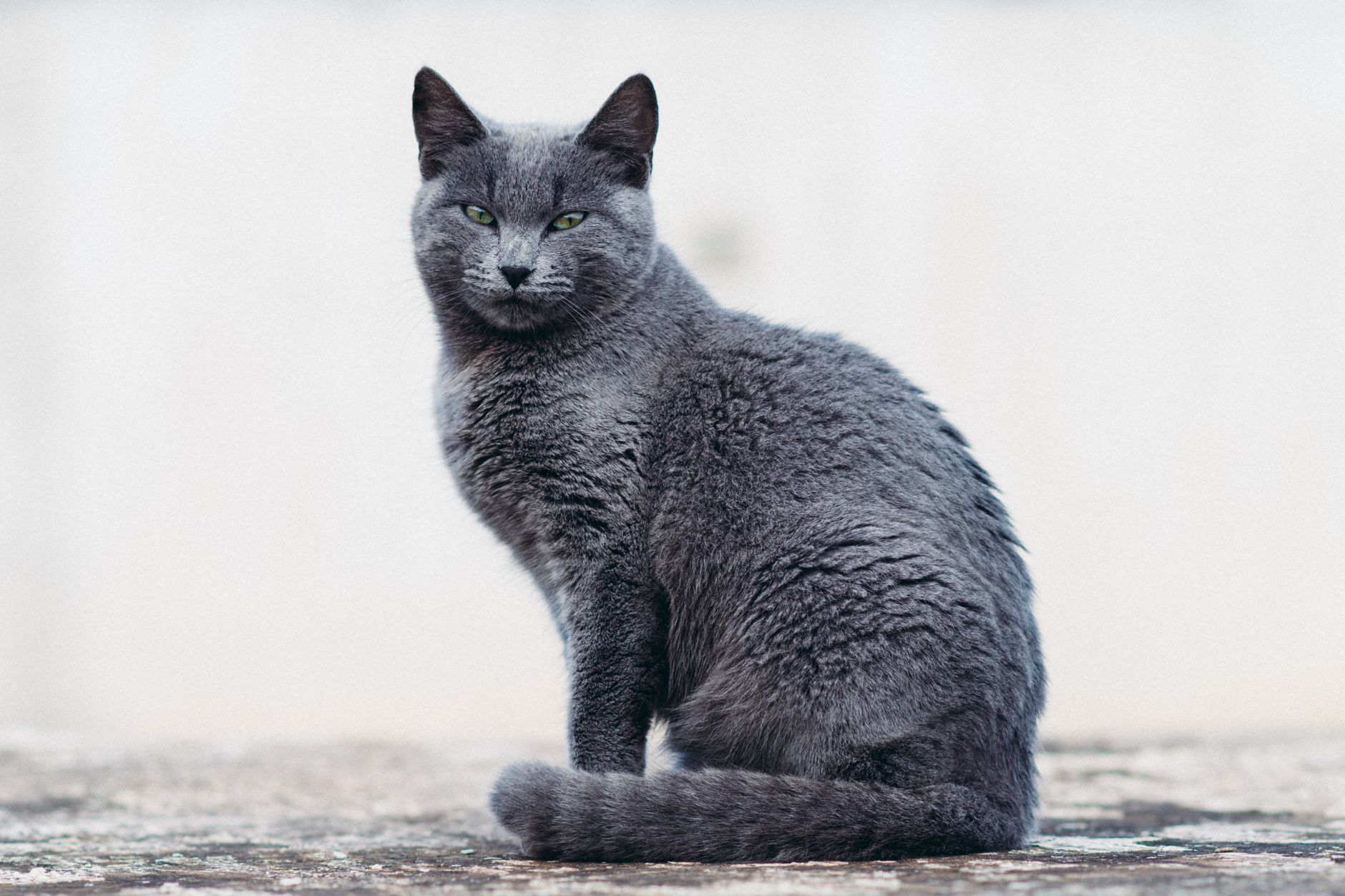
In short: The Russian Blue is a medium-sized, short-haired cat breed known for its dense blue-gray coat, vivid green eyes, and quietly devoted personality. Weighing 7–12 pounds and living 15–20 years, this naturally healthy domestic cat is gentle, intelligent, and reserved with strangers but deeply bonded to its own family — an ideal indoor companion for calm, attentive homes.
Often called the “Archangel cat” after its Russian port of origin, the Russian Blue combines the elegance of a shorthair with a plush double coat that sparkles silver in the light. This guide covers everything American owners ask about the breed: personality, size, health, grooming, price from reputable breeders, whether Russian Blues are hypoallergenic, and how to tell a true Russian Blue from an ordinary gray cat.

Russian Blue Cat Breed Info Card
| Trait | Russian Blue |
|---|---|
| Height | 9–11 inches at the shoulder |
| Weight | Males 10–12 pounds; females 7–10 pounds |
| Lifespan | 15–20 years — one of the longest-lived cat breeds |
| Coat | Short, dense, plush double coat that stands out from the body |
| Colors | Solid blue (blue-gray) with silver-tipped guard hairs; no other colors accepted |
| Eyes | Vivid, deep green (kittens are born with yellow eyes that turn green by adulthood) |
| Temperament | Gentle, quiet, intelligent, loyal, reserved with strangers |
| Origin | Arkhangelsk (Archangel), Northern Russia |
| Shedding | Low to moderate |
| Good with | Families, seniors, respectful children, other calm pets |
| Kitten price (US) | Roughly $500–$1,500 from reputable breeders; $2,000+ for show lines |
- Affection with family
- Energy level
- Vocality
- Shedding
- Good with kids
- Good with other pets
- Friendliness to strangers
- Intelligence
History: The Cat From Archangel
The Russian Blue is a natural breed, meaning it developed on its own without deliberate human crossbreeding. Most historians trace its origins to the port city of Arkhangelsk — anglicized as “Archangel” — in far northern Russia, which is why the breed is sometimes called the Archangel Blue or Archangel cat. The dense, insulating coat that defines the breed is exactly what you would expect from a cat that evolved to survive brutal sub-Arctic winters.
According to breed lore, sailors brought these striking blue-gray cats from Arkhangelsk to Northern Europe in the 1860s, where they caught the eye of British and Scandinavian cat fanciers. A Russian Blue was exhibited at London’s Crystal Palace cat show as early as 1875, listed simply as the “Archangel Cat.” For decades the breed competed against other blue shorthairs before earning its own class.
World War II nearly ended the breed. With numbers dangerously low in Europe, breeders in Britain and Scandinavia crossed surviving Russian Blues with Siamese and British Shorthairs to keep the line alive. That outcrossing temporarily changed the breed’s look — introducing a more foreign, Siamese-like body — and post-war breeders worked hard to restore the sturdier, plush-coated cat we recognize today. The modern Russian Blue reflects a careful blend of American, British, and Scandinavian bloodlines, and the breed has been recognized by the Cat Fanciers’ Association (CFA) and The International Cat Association (TICA) for generations.

Russian Blue Temperament and Personality
If you want a cat that is calm, clean, and quietly affectionate, the Russian Blue personality is hard to beat. These cats are famously gentle and reserved — the introverts of the cat world. They form intense bonds with their chosen people, often following one favorite family member from room to room, greeting them at the door, and curling up nearby without demanding constant attention. Many owners describe their Russian Blue as a “shadow” that wants to be with you, not necessarily on you.
With strangers, the story is different. The Russian Blue is naturally shy and cautious, and a doorbell will often send one sprinting under the bed until the visitor leaves. This isn’t a sign of an unhappy cat — it’s simply the breed’s discerning, sensitive nature. Given time, a Russian Blue may warm to trusted regular guests, but they will never be the lap-hopping social butterfly that some other breeds are.
Intelligence is another hallmark. Russian Blues are quick learners who enjoy puzzle feeders, fetch, and even simple trick training. They have an excellent memory and a strong sense of routine — they will remind you at feeding time and can become genuinely stressed by chaos, loud households, or sudden changes to their schedule. A tidy litter box matters enormously to this fastidious breed; many Russian Blues will refuse a dirty box entirely.
Do Russian Blue cats like to be held? Some do, on their own terms, but most prefer to sit beside you rather than be picked up and cuddled against their will. They show affection through proximity, gentle head-butts, soft chirps, and a quiet trilling meow. Forcing physical handling is the fastest way to lose a Russian Blue’s trust; earning it with patience is what makes the breed so rewarding.
Are Russian Blues Good Family Cats?
Yes — with the right household. Russian Blues are excellent companions for calm families, working professionals, seniors, and respectful older children. Their even temperament and low-drama nature make them one of the easier purebred cats to live with. They generally get along well with other cats and cat-friendly dogs, especially when introduced slowly, and their gentle play style rarely tips into aggression.
The one caveat is sensitivity to noise and disruption. A house full of shrieking toddlers, slamming doors, and unpredictable routines can leave a Russian Blue chronically stressed and hidden. For homes with very young children, success depends on teaching kids to let the cat approach on its own terms. In a quieter home, though, few breeds are as devoted, well-mannered, and easy to care for.
Size and Appearance
The Russian Blue is a medium-sized cat with a deceptively lean, muscular build often hidden beneath its thick coat. Males typically weigh 10–12 pounds and females 7–10 pounds, standing about 9–11 inches tall. The breed has fine bones, long legs, and small, almond-shaped paws — it walks as though on tiptoe, giving it a graceful, dancer-like gait.
Three physical features make the breed instantly recognizable. First, the coat: a short but exceptionally dense double coat of solid blue (a soft blue-gray) with silver-tipped guard hairs that catch the light and give the cat a shimmering, almost metallic sheen. Second, the eyes: kittens are born with yellow eyes that deepen to a striking, vivid green by about one year of age. Third, the expression: a slight upturn at the corners of the mouth gives the Russian Blue its signature “Mona Lisa smile.” A double row of whiskers and large, wide-set ears complete the elegant, wide-eyed look.
Is there a long-haired Russian Blue? Not officially. The breed standard calls only for a short coat. A closely related long-haired cat called the Nebelung was developed from Russian Blue lines and looks like a long-haired version, but true Russian Blues are always shorthaired. Any “long-haired Russian Blue” for sale is either a Nebelung or a mixed-breed cat.
How to Tell a True Russian Blue From a Gray Cat
Plenty of gray or blue-gray domestic cats get called “Russian Blues,” but the true breed has specific, verifiable traits. Because millions of gray shelter cats share the color but not the pedigree, knowing the difference matters — especially before you pay breed prices.
| Feature | True Russian Blue | Ordinary gray cat |
|---|---|---|
| Coat color | Uniform blue-gray, no tabby stripes or patches | Often has tabby markings, white spots, or uneven shading |
| Guard hairs | Silver-tipped, giving a distinct shimmer | Rarely silver-tipped |
| Eye color | Vivid green in adults | Yellow, gold, copper, or green — variable |
| Paw pads | Mauve/lavender-pink | Usually gray or black |
| Nose leather | Slate gray | Variable |
| Coat texture | Dense, plush, stands out from the body | Usually flatter, single-layered |
| Documentation | Registered pedigree from CFA/TICA breeder | None |
The only way to be certain a cat is a purebred Russian Blue is a registered pedigree from a recognized breeder. Green eyes, mauve paw pads, and a silver-tipped double coat are strong indicators, but a shimmering gray coat alone doesn’t make a Russian Blue — it may be a Chartreux, a Korat, a British Blue Shorthair, or simply a beautiful gray domestic shorthair.
Russian Blue Health and Lifespan
⚠️ See a veterinarian promptly if you notice:
- Increased thirst and urination, or weight loss despite a good appetite — possible diabetes, which this breed can be prone to if overweight.
- Straining in the litter box, blood in the urine, or crying while urinating — a urinary blockage is a life-threatening emergency, especially in male cats.
- Rapid or open-mouth breathing, lethargy, or fainting — possible heart disease such as hypertrophic cardiomyopathy.
- Cloudy or bluish eyes, or bumping into objects — signs of eye problems that warrant a prompt exam.
The Russian Blue is one of the healthiest and longest-lived cat breeds, with a typical lifespan of 15–20 years and many cats reaching their late teens in excellent condition. Because the breed developed naturally rather than through intensive selective breeding, it carries fewer inherited disorders than many designer breeds. Still, no cat is immune, and responsible owners should watch for a few conditions:
- Obesity. This is the breed’s number-one health risk. Russian Blues love food and can be relentless beggars; owners who free-feed often end up with overweight cats. Excess weight drives diabetes, joint strain, and urinary problems.
- Diabetes mellitus. Linked closely to obesity, diabetes is manageable but requires lifelong care. Keeping your cat lean is the single best preventive step.
- Urinary tract issues. Bladder stones and feline lower urinary tract disease (FLUTD) can affect the breed; adequate water intake and a clean litter box help.
- Hypertrophic cardiomyopathy (HCM). The most common heart disease in cats occurs in this breed too. Reputable breeders screen breeding cats with echocardiograms.
- Eye conditions. Occasional reports of progressive retinal atrophy and other eye issues make annual eye checks worthwhile.
Annual wellness exams, core vaccinations, dental care, and year-round parasite prevention round out a lifetime of good health. Spaying or neutering, keeping your cat indoors, and maintaining a lean body condition are the highest-impact things any owner can do.
This article is informational and does not replace an exam by a licensed veterinarian. If you suspect a health problem, consult your vet.
Are Russian Blues Hypoallergenic?
Russian Blues are often marketed as hypoallergenic, and there’s a grain of truth behind the claim — but no cat is truly allergen-free. Cat allergies are caused mainly by a protein called Fel d 1, found in saliva and skin secretions and spread through grooming. Russian Blues are widely reported to produce lower levels of Fel d 1 than average, and their dense coat may trap more dander close to the skin, meaning less allergen shed into the environment.
Many allergy sufferers do report milder reactions to Russian Blues, but results vary enormously from person to person. If you have allergies, spend time with an adult Russian Blue before committing, and plan to manage exposure with air purifiers, frequent cleaning, and hand-washing regardless. Treat “hypoallergenic” as “possibly lower-allergen,” not a guarantee.
Grooming and Coat Care
Grooming a Russian Blue is refreshingly simple. The short, dense double coat is low-maintenance and largely self-cleaning; a weekly brushing with a soft slicker or grooming glove is enough to remove loose hair, distribute natural oils, and keep that signature shimmer. During spring and fall shedding seasons, brushing two or three times a week keeps stray hair off your furniture. Russian Blues are moderate shedders — noticeably lighter than long-haired breeds — and their fastidious self-grooming means they rarely need baths.
Round out the routine with nail trims every couple of weeks, weekly ear checks, and — most important — regular dental care, since dental disease is common in all cats. Brushing your cat’s teeth several times a week with a feline-safe toothpaste, plus professional cleanings as your vet recommends, protects long-term health. Provide a sturdy scratching post to satisfy natural scratching instincts and keep those claws healthy.
Feeding, Exercise, and Enrichment
Because the Russian Blue is so food-motivated and prone to weight gain, portion control is the cornerstone of feeding this breed. Choose a high-quality cat food that meets AAFCO standards for your cat’s life stage, with a named animal protein as the first ingredient, and feed measured meals rather than leaving food out all day. Many owners find that puzzle feeders and slow-feeder bowls both pace eating and provide mental stimulation. Fresh water should always be available; a pet fountain can encourage drinking and support urinary health.
- Kittens: feed a kitten-formula food in several small meals a day to fuel growth.
- Adults: two measured meals daily; monitor body condition and adjust portions as needed. You should be able to feel the ribs easily and see a slight waist from above.
- Treats: keep them under 10% of daily calories and use them for training and bonding.
Though calm, Russian Blues are playful and intelligent and need daily activity to stay fit and happy. Fifteen to twenty minutes of interactive play once or twice a day — wand toys, fetch (many Russian Blues genuinely retrieve), and food-puzzle games — keeps their sharp minds engaged and their waistlines trim. They appreciate vertical space like cat trees and window perches, and because the breed values routine, playing at consistent times each day helps them settle. As sensitive homebodies, Russian Blues are best kept as indoor cats, which also protects their long lifespan.
Is a Russian Blue Right for You?
🐾 Who this breed suits
- First-time cat owners
- Quiet, calm households
- Working professionals (cat home alone)
- Seniors & apartment dwellers
- Families with young, loud children
- Homes wanting a social, outgoing lap cat
- Allergy sufferers (lower-allergen, not allergen-free)
Get a Russian Blue if: you want a gentle, clean, low-maintenance cat that bonds deeply with its family, you keep a relatively calm and predictable home, and you appreciate a quietly affectionate companion over a demanding, showy one. They suit apartments, seniors, and busy professionals well, since an adult Russian Blue tolerates being alone for a normal workday better than more clingy breeds.
Think twice if: your household is loud and chaotic, you want a cat that greets every guest and loves being carried around, or you can’t commit to portion control and daily play. A stressed, bored, or overfed Russian Blue is an unhappy cat — but meet its modest needs and you’ll have one of the most rewarding companions in the cat world.
Russian Blue Kittens, Breeders, and Price

How much does a Russian Blue cat cost? From reputable Russian Blue breeders in the United States, expect to pay roughly $500–$1,500 for a pet-quality kitten, with most falling around $600–$1,000. Show-quality kittens or those from top-winning show lines can run $2,000 or more. Beware of “Russian Blue kittens for sale” ads priced far below this range with no pedigree — they are usually gray domestic shorthairs, not the true breed. Budget beyond the purchase price too: quality food, litter, routine veterinary care, and pet insurance typically add $600–$1,200 per year.
When choosing a breeder, look for one registered with the CFA or TICA who health-screens breeding cats (including HCM echocardiograms), raises kittens underfoot in the home for good socialization, provides a written health guarantee, and won’t release kittens before 12–14 weeks of age. A good breeder will ask you plenty of questions too. Ask to see the kitten’s parents, verify pedigree paperwork, and confirm early vaccinations and a vet check.
Consider adoption. Purebred Russian Blues do occasionally appear in shelters and through breed-specific rescues, and countless beautiful blue-gray domestic shorthairs with the same gentle looks are waiting for homes right now. Adoption fees typically run $50–$200 and usually include spay/neuter, vaccinations, and microchipping. Whether or not the cat comes with papers, a gray shorthair from a shelter can be every bit as loving as a pedigreed Russian Blue.
Frequently Asked Questions
How much should a Russian Blue cat cost?
A Russian Blue kitten from a reputable US breeder typically costs $500–$1,500, with most pet-quality kittens around $600–$1,000. Show-quality cats from champion lines can exceed $2,000. Prices far below this range usually indicate a gray domestic cat rather than a true, pedigreed Russian Blue. Annual care adds roughly $600–$1,200.
What’s so special about Russian Blue cats?
Russian Blues are prized for their shimmering silver-tipped blue coat, vivid green eyes, and signature “Mona Lisa smile,” paired with a gentle, intelligent, deeply loyal personality. They are naturally healthy, long-lived (15–20 years), quiet, and clean. Many produce lower levels of the Fel d 1 allergen, making them somewhat easier on allergy sufferers than the average cat.
What are the downsides to Russian Blue cats?
Russian Blues are shy and reserved, often hiding from guests and disliking loud, chaotic homes or sudden changes to routine. They can be very food-motivated and prone to obesity without portion control. They bond to one or two people and may seem aloof with others. They are not the outgoing, social lap cat some owners expect.
How do you tell if a cat is a true Russian Blue?
A true Russian Blue has a uniform blue-gray coat with silver-tipped guard hairs, vivid green eyes in adulthood, mauve-pink paw pads, slate-gray nose leather, and a plush double coat that stands out from the body. There are no tabby stripes or white patches. Certainty requires a registered pedigree from a CFA or TICA breeder.
Do Russian Blue cats like to be held?
Most Russian Blues prefer to sit beside you rather than be picked up and cuddled. They are deeply affectionate but on their own terms, showing love through proximity, gentle head-butts, and soft trilling rather than constant lap-sitting. Some tolerate being held, but forcing handling erodes their trust. Let a Russian Blue come to you.
How long can you leave a Russian Blue cat alone?
A healthy adult Russian Blue can comfortably handle a normal 8–10 hour workday alone, provided it has fresh water, a clean litter box, food, and enrichment like toys and a window perch. For absences longer than 24 hours, arrange a pet sitter. These cats value routine, so consistent feeding and play times reduce stress when you’re away.
Do Russian Blue cats need another cat?
Russian Blues don’t require a companion but often do well with a calm, compatible cat, especially if raised together or introduced slowly. As homebodies that bond closely with their people, they’re usually content as a solo pet in an attentive household. Avoid pairing them with overly boisterous or aggressive cats, which can stress this sensitive breed.
Are Russian Blue cats hypoallergenic?
No cat is truly hypoallergenic, but Russian Blues are widely reported to produce lower levels of the Fel d 1 allergen, and their dense coat may trap more dander close to the skin. Many allergy sufferers tolerate them better than the average cat, though results vary. Spend time with one before committing, and manage exposure with cleaning and air purifiers.
Related Cat Breeds
Drawn to the Russian Blue’s elegant looks or gentle temperament? Explore these related breeds and more in our cat breeds hub:
- British Shorthair — the plush “British Blue” is calm, sturdy, and even more laid-back, though far more social with strangers.
- Chartreux — the French blue cat with a woolly coat and copper-gold eyes; quiet, sweet, and often mistaken for a Russian Blue.
- Nebelung — essentially a long-haired Russian Blue, sharing the shimmering blue coat, green eyes, and reserved personality.
Sources: Cat Fanciers’ Association (CFA), The International Cat Association (TICA), Merck Veterinary Manual, and Cornell Feline Health Center — consulted for facts only. All text is original.
This article is for informational purposes and does not replace an examination by a licensed veterinarian.
