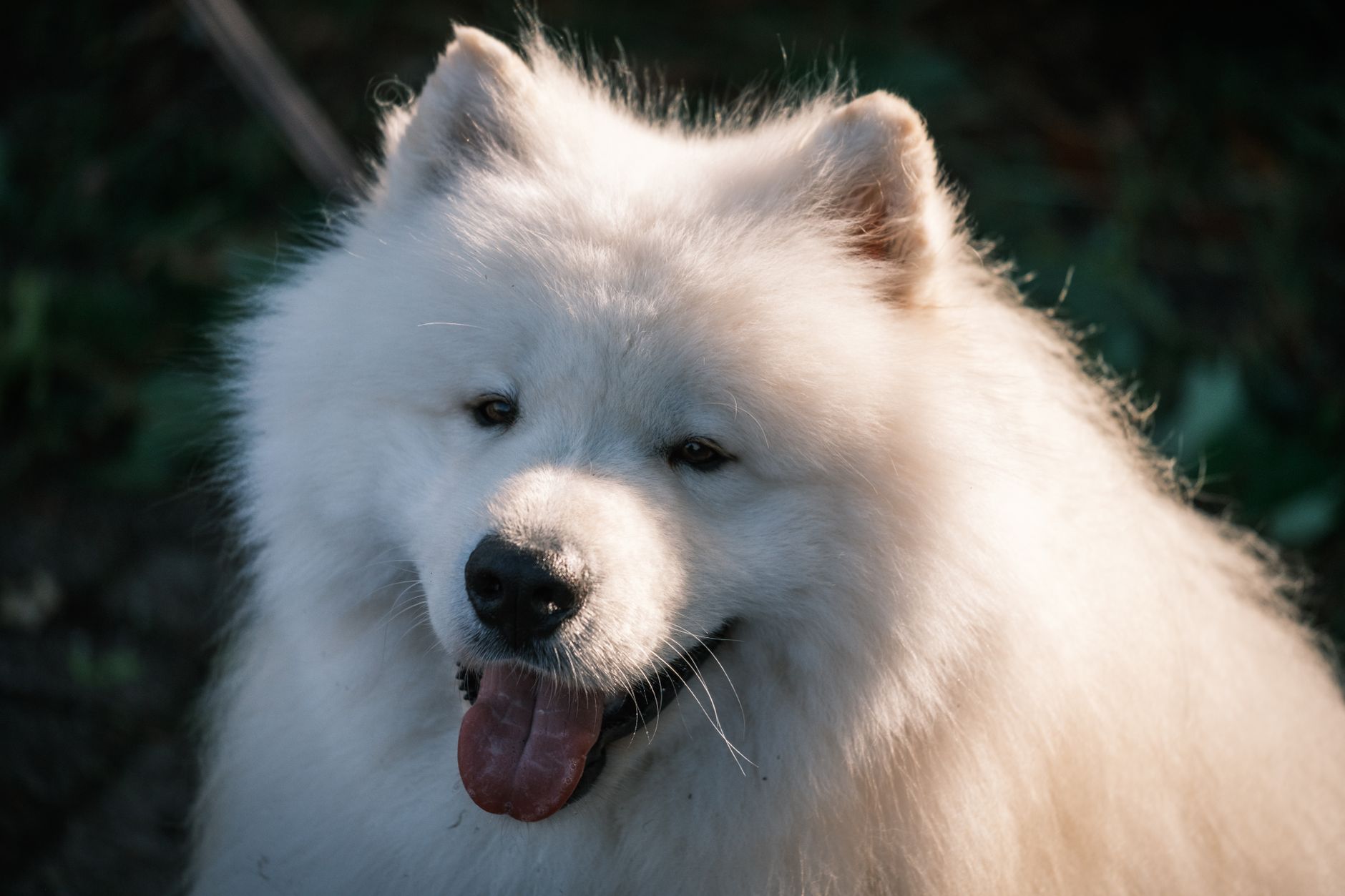
In short: The Samoyed is a medium-sized Siberian working dog breed, standing 19–23.5 inches tall and weighing 35–65 pounds, famous for its thick white coat and the upturned “Sammy smile.” Bred by the nomadic Samoyede people to herd reindeer, pull sleds, and sleep beside children for warmth, the Samoyed is friendly, gentle, playful, and deeply devoted to its family.
Nicknamed the “Sammy” or “smiley dog,” this white fluffy breed lives 12–14 years and thrives on human company. This guide covers everything American owners ask about the Samoyed: temperament, size, health, that legendary shedding, an honest answer to the hypoallergenic question, puppy prices from reputable breeders, and whether a Samoyed is the right dog for your home.

Samoyed Breed Info Card
| Trait | Samoyed |
|---|---|
| Height | Males 21–23.5 inches; females 19–21 inches at the shoulder |
| Weight | Males 45–65 pounds; females 35–50 pounds |
| Lifespan | 12–14 years |
| Coat | Thick, weather-resistant double coat with a straight, stand-off outer coat |
| Colors | Pure white, cream, biscuit, or white and biscuit |
| Temperament | Friendly, gentle, playful, alert, social, stubborn |
| AKC Group | Working Group (recognized 1906) |
| Origin | Siberia — bred by the nomadic Samoyede people |
| Exercise needs | High — at least 1–2 hours of activity daily |
| Shedding | Very heavy, with intense seasonal “coat blows” |
| Puppy price (US) | Roughly $2,000–$5,000 from reputable breeders; $8,000+ for show lines |
- Energy level
- Trainability
- Shedding
- Good with kids
- Good with other pets
- Barking / vocality
- Watchdog instinct
- Suitable for first-time owners
History: A Dog Bred to Live With People
The Samoyed takes its name from the Samoyede (now more accurately called the Nenets and related Samoyedic peoples), nomadic reindeer herders who lived across the vast, brutally cold tundra of northwestern Siberia. For centuries these people and their white dogs were inseparable. The dogs did everything the family needed: they herded and guarded the reindeer, hauled sledges loaded with belongings across the snow, hunted, and — crucially — slept piled together with their humans inside the chooms (tents) to keep everyone alive through nights that dropped to 60 below zero.
That last job explains the Samoyed’s personality better than anything. This was never a distant, kennel-raised working animal held at arm’s length. It was a household dog, bred to be trustworthy around children, calm inside a crowded tent, and endlessly companionable. The modern Samoyed’s craving for human contact — its refusal to be left alone in the yard — is a direct inheritance from a culture that treated the dogs as family members.
The breed reached the West in the late 1800s, when explorers recruited Samoyeds for polar expeditions to the Arctic and Antarctic. English fanciers, including Queen Alexandra, became early champions, and the standard was refined in Britain. The American Kennel Club recognized the Samoyed in 1906. Along the way the breed picked up its most endearing feature and nickname: the “Sammy smile,” the upturned corners of the mouth that give the dog a permanent grin. That smile isn’t only charming — the upcurved lip line helps prevent drooling and keeps icicles from forming around the mouth, a practical adaptation for a life in the deep freeze.

Samoyed Temperament and Family Life
The Samoyed temperament is warm, gentle, and irrepressibly social. This is one of the friendliest breeds in the working group — a dog that greets strangers as potential friends and genuinely wants to be part of everything the family does. Sammies are playful well into old age, affectionate without being needy in a nervous way, and famous for their patience with children. The old herding-and-guarding instinct gives them a watchful side, so they will alert you to visitors, but they make poor guard dogs precisely because they like people too much.
Is a Samoyed a good family dog? Yes — for an involved household, the Samoyed is an excellent family dog. It is gentle with kids, sociable with other dogs, and typically fine with cats it is raised alongside, though its herding heritage can trigger some chasing of small, fast-moving animals. The breed’s biggest requirement is companionship. A Samoyed left alone in a backyard for long stretches becomes bored, lonely, and destructive, and a bored Sammy digs impressive craters and barks the neighborhood awake.
Does a Samoyed bark a lot? Yes, Samoyeds are a vocal breed. They bark, they “talk,” and they can develop a real barking habit if under-exercised or left alone too much. Early training and plenty of mental and physical stimulation keep the volume manageable, but prospective owners in close quarters should go in with eyes open. This is not a silent dog.
The other side of that sweet nature is a stubborn streak. Samoyeds are intelligent and independent — traits that helped them make decisions on the trail without a handler — which means they don’t offer the instant obedience of a Border Collie. They respond beautifully to positive, patient, engaging training and shut down under harsh corrections. Think of the Samoyed as a willing partner who needs to be convinced, not a soldier who takes orders.
Samoyed Size: How Big Do They Get?
The Samoyed is a medium-sized dog that often looks larger than it is, thanks to that voluminous coat. Males stand 21 to 23.5 inches at the shoulder and weigh roughly 45 to 65 pounds; females stand 19 to 21 inches and weigh about 35 to 50 pounds. Under the fluff is a sturdy, well-muscled, square-built dog designed for endurance rather than sprinting speed.
A quick word on marketing terms: there is no “miniature” or “teacup” Samoyed recognized by the AKC — dogs sold under those labels are typically runts, mixes, or bred for unhealthy small size. Likewise, a genuine “black Samoyed” does not exist in the breed standard; the Samoyed comes only in white, cream, biscuit, and white-and-biscuit. A solid black fluffy dog is another breed or a mix.
Samoyed Health Issues
⚠️ See a veterinarian promptly if you notice:
- Increased thirst and urination, weight loss, or a change in appetite — possible diabetes or the early kidney changes of Samoyed hereditary glomerulopathy.
- Excessive thirst combined with foamy or bloody urine, or swelling — signs of kidney disease that need urgent evaluation, especially in young male Samoyeds.
- Fainting, exercise intolerance, or a heart murmur noted by your vet — possible subvalvular aortic stenosis, a congenital heart defect.
- Limping, bunny-hopping gait, or reluctance to rise and jump — possible hip dysplasia, especially in a growing dog.
- Bumping into furniture in dim light, cloudy eyes, or night blindness — early signs of progressive retinal atrophy or cataracts.
The Samoyed is generally a hardy breed, but it carries a handful of inherited conditions that responsible breeders screen for. Ask any breeder for documentation before you buy, and understand what you’re looking at:
- Samoyed hereditary glomerulopathy (Samoyed kidney disease). This is the breed’s signature genetic condition, an X-linked disorder of the kidney’s filtering membrane. Affected male dogs typically develop progressive kidney failure in the first years of life, while carrier females are usually far less severely affected. DNA testing is available, and it is the single most important reason to buy from a breeder who genetically screens their lines.
- Hip dysplasia. A malformation of the hip joint that leads to arthritis and pain over time. Reputable breeders provide OFA or PennHIP evaluations on both parents.
- Progressive retinal atrophy (PRA). An inherited, gradual degeneration of the retina that eventually causes blindness. There is no cure, but DNA testing lets breeders avoid producing affected puppies.
- Subvalvular aortic stenosis (SAS). A congenital narrowing below the aortic valve that forces the heart to work harder; it can range from mild to life-threatening. Breeding dogs should be cleared by a veterinary cardiologist.
- Diabetes mellitus. Samoyeds have an above-average predisposition to diabetes. Watch for increased thirst, increased urination, and unexplained weight loss; it is manageable with insulin and diet but requires lifelong commitment.
- Other eye and joint issues. Cataracts, glaucoma, and retinal dysplasia appear in the breed, as does elbow dysplasia. Annual eye exams by a veterinary ophthalmologist (CAER exams) are standard for breeding dogs.
This article is informational and does not replace an exam by a licensed veterinarian. If you suspect a health problem, consult your vet.
Samoyed Lifespan
The Samoyed lifespan is typically 12 to 14 years, a healthy span for a medium-sized breed. Owners can stack the odds toward the upper end of that range by buying from health-tested parents, keeping the dog lean, providing consistent daily exercise, feeding a quality diet, and staying current on veterinary screening — particularly for the kidney and heart conditions the breed is prone to. A Samoyed that stays fit and mentally engaged often remains playful and puppyish deep into its senior years.
Grooming and Shedding: The Honest Truth
Here is the part of Samoyed ownership no one should sugarcoat: the coat is a major, non-negotiable time commitment. That gorgeous white fluffy double coat — a soft, dense, wooly undercoat beneath a longer, harsher, stand-off outer coat — needs brushing several times a week at minimum, and daily during the heavy shedding seasons. Skip it and the undercoat mats down to the skin, which is painful for the dog and often can only be fixed by shaving.
Do Samoyeds shed? Enormously. Samoyeds are among the heaviest-shedding breeds you can own. On top of year-round shedding, they “blow” their undercoat once or twice a year — typically spring and fall — in a dramatic multi-week event that produces astonishing quantities of loose fur. During a coat blow you’ll be brushing daily, and clumps of white undercoat will drift across your floors, furniture, and clothing no matter how diligent you are. Many owners jokingly measure the season in trash bags of fur. On the bright side, Samoyed fur is prized by spinners and can be spun into surprisingly warm yarn.
Are Samoyeds hypoallergenic? No — and this is worth being blunt about, because the myth persists. No dog is truly hypoallergenic, and a heavy-shedding, double-coated breed like the Samoyed is one of the worst choices for allergy sufferers. Pet allergies are triggered mainly by proteins in dander and saliva, not by hair length, and a Samoyed spreads plenty of both. If someone in your home has dog allergies, do not count on a Samoyed being safe; spend real time around the breed first.
The rest of the grooming routine is standard but should not be skipped: bathe every 6–8 weeks or when genuinely dirty (the coat is somewhat dirt- and odor-resistant, so it needs less bathing than you’d expect), trim nails every few weeks, brush teeth several times a week, and check ears regularly. Never shave a Samoyed down for summer thinking you’re helping — the double coat actually insulates against heat as well as cold, and shaving can permanently damage how it grows back.

Feeding a Samoyed
Feed a Samoyed a high-quality dog food that meets AAFCO standards for its life stage, with a named animal protein as the first ingredient. Because the breed is prone to diabetes and to weight gain easily hidden under all that fur, portion control matters more here than in many breeds — run your hands along the ribs weekly rather than trusting your eyes.
- Puppies: feed a formula appropriate for medium-breed puppies, split into 3–4 meals a day, to support steady growth and developing joints.
- Adults: two meals a day; adjust the amount to the individual dog’s activity level and body condition, not just the bag’s chart.
- Body condition: you should be able to feel the ribs easily and see a waist from above. Because obesity worsens both joint disease and diabetes risk, keeping a Sammy lean is one of the best things you can do for its long-term health.
- Treats: keep them under 10% of daily calories and lean on them for training, which this food-motivated breed enjoys.
Exercise and Training
Do not let the fluffy, friendly looks fool you: the Samoyed is a working sled dog with real stamina and needs a solid 1 to 2 hours of activity a day. Long walks, hikes, jogging, and off-leash play in a secure area all suit the breed. Sammies love having a job, and they excel at canine sports that channel their heritage — sledding, skijoring, carting, and weight pull — as well as agility, herding trials, obedience, and nosework. A Samoyed that gets enough exercise is calm and pleasant at home; one that doesn’t becomes a barking, digging, escape-artist handful.
Two cautions shape how you exercise this breed. First, the coat that keeps them warm in Siberia makes them prone to overheating; in hot weather, exercise in the cool of early morning or evening and always provide shade and water. Second, the Samoyed’s herding and mild prey drive plus its independent streak make it an unreliable off-leash dog near roads — many will take off after a squirrel or a jogging deer. A fenced yard and a reliable long-line are your friends.
- Start socialization early. Expose your puppy to people, dogs, surfaces, and sounds from 8 weeks on to build the confident, friendly adult the breed is known for.
- Keep training positive and fun. Samoyeds are smart but stubborn and sensitive; reward-based methods and short, varied sessions work; harsh corrections backfire.
- Address barking and digging proactively. Give the dog enough exercise, mental work, and company that it doesn’t invent its own entertainment.
- Never leave a Sammy isolated. This is a companion breed to its core; long hours alone create the very behavior problems people complain about.
Is a Samoyed Right for You?
🐾 Who this breed suits
- First-time dog owners (committed ones)
- Active families & hikers
- Families with children
- Homes with other dogs
- Cold-climate living
- Hot-climate living
- Allergy sufferers
- People away from home long hours
Get a Samoyed if: you want a friendly, gentle, people-loving companion, you have time at home and a household the dog can be part of, you can commit to serious grooming and heavy shedding, and you can provide 1–2 hours of daily exercise. Sammies reward an involved owner with years of smiling, affectionate companionship.
Skip the Samoyed if: you or a family member have dog allergies, you can’t tolerate fur on everything, you’re away from home all day, you live somewhere very hot without air conditioning, or you want a low-maintenance, off-leash-reliable, quiet dog. This beautiful breed asks a lot in return for its charm.
Samoyed Puppies, Breeders, and Price

How much does a Samoyed cost? From reputable Samoyed breeders in the United States, expect a puppy price of roughly $2,000 to $5,000, with the average landing around $2,500. Show-quality puppies from champion bloodlines can exceed $8,000. Prices vary by region and by the health testing and titling behind the litter. Beyond the purchase price, budget $900–$2,070 for initial supplies and first-year vet care, plus roughly $1,500–$2,500 a year in ongoing food, grooming, and veterinary costs — and factor in professional grooming if you won’t do the coat yourself.
Yes, the Samoyed is an expensive dog, and that price reflects a small breeding population, demanding health screening, and high demand for the “smiling” white puppies. When evaluating a Samoyed dog breeder, insist on documentation: OFA hip evaluations, cardiac clearance, eye exams (CAER), and DNA testing — especially for hereditary glomerulopathy and PRA. A good breeder health-tests both parents, raises puppies in the home, asks you plenty of questions, and provides a health guarantee. Be very wary of “Samoyed puppies for sale” ads with rock-bottom prices, no health testing, or claims of “miniature,” “teacup,” or “black” Samoyeds — these are red flags for puppy mills and misrepresentation.
Consider rescue. Samoyeds do end up needing new homes, often surrendered by owners who underestimated the shedding, the exercise needs, or the dog’s need for company. Breed-specific organizations like the National Samoyed Rescue and its regional partners place adult dogs with known temperaments, usually for an adoption fee in the range of a few hundred dollars. For many families, adopting an adult Sammy is a wonderful — and more affordable — way into the breed.
Frequently Asked Questions
Is a Samoyed a high maintenance dog?
Yes. The Samoyed is high maintenance on two fronts: its thick double coat demands brushing several times a week plus intense seasonal shedding, and its social, energetic nature demands daily exercise and near-constant companionship. A Samoyed left under-groomed or alone too long develops mats, barking, and destructive habits. It’s a rewarding but genuinely demanding breed.
Is a Samoyed an expensive dog?
Yes. Samoyed puppies from reputable breeders typically cost $2,000–$5,000, averaging around $2,500, with show lines topping $8,000. On top of the purchase price, expect roughly $1,500–$2,500 a year in food, grooming, and veterinary care. Heavy grooming needs and the breed’s health-screening requirements keep both upfront and lifetime costs high.
Are Samoyeds a type of husky?
No. The Samoyed and the Siberian Husky are separate breeds, though both are ancient Arctic spitz-type dogs bred by different Siberian peoples for cold-weather work. Samoyeds come only in white to biscuit shades and were bred as herders and all-purpose family dogs; Huskies come in many colors and were bred primarily as fast sled dogs. They’re relatives, not the same dog.
Is a Samoyed a good family dog?
Yes, Samoyeds are excellent family dogs for involved households. They are gentle and patient with children, sociable with other dogs, and deeply devoted to their people — a trait rooted in their history of sleeping alongside Siberian families for warmth. They do need daily exercise, heavy grooming, and lots of company, so they suit active families who are home often.
Does a Samoyed bark a lot?
Yes. Samoyeds are a vocal breed that barks, howls, and “talks,” and they can become nuisance barkers when bored, under-exercised, or left alone too long. Consistent training, enough physical and mental stimulation, and plenty of companionship keep the barking in check, but this is not a naturally quiet dog and may not suit close apartment living.
Are Samoyeds hypoallergenic?
No. Despite the myth, Samoyeds are not hypoallergenic — no dog truly is. Allergies are triggered by proteins in dander and saliva, and the Samoyed’s heavy-shedding double coat spreads plenty of both. This is one of the least allergy-friendly breeds. If a household member has dog allergies, spend significant time around Samoyeds before committing.
How long do Samoyeds live?
Samoyeds typically live 12 to 14 years, a healthy lifespan for a medium-sized breed. Buying from health-tested parents, keeping the dog lean and well-exercised, feeding a quality diet, and screening for the breed’s kidney, heart, and eye conditions all help a Samoyed reach the upper end of that range in good, active health.
Do Samoyeds shed a lot?
Yes, heavily. Samoyeds shed year-round and “blow” their thick undercoat once or twice a year in a multi-week event that produces enormous amounts of loose white fur. Expect fur on floors, furniture, and clothing, and plan on brushing several times a week — daily during shedding season. Their beauty comes with a serious, ongoing grooming and cleanup commitment.
Related Breeds
If the Samoyed’s smile has you exploring fluffy, cold-weather breeds, compare it with these relatives and look-alikes in our dog breeds hub:
- American Eskimo Dog — a smaller white spitz that comes in toy, miniature, and standard sizes; often mistaken for a “mini Samoyed” but a distinct breed.
- Siberian Husky — the fast, blue-eyed Siberian sled dog; similar energy and shedding, more independent and escape-prone, and available in many colors.
- Alaskan Malamute — a larger, more powerful Arctic freight-hauling breed with a similar double coat and love of cold, but greater size and strength.
Sources: American Kennel Club (AKC), Samoyed Club of America, Orthopedic Foundation for Animals (OFA), Merck Veterinary Manual, and current US breeder price data — consulted for facts only. All text is original.
This article is for informational purposes and does not replace an examination by a licensed veterinarian.
